
Review · WALKING TOURS
Walk Antigua Like a Local
Antigua rewards those who slow down. This $32 walking tour gives you a useful first look at the city, from Plaza Central Park and La Merced Church to Santo Domingo ruins and the Santa Catalina Arch. I like the efficient route and the way local guides add context that is easy to miss when you wander alone.
I also like the practical help built into the experience. Guides such as Roberto, Carlos, Felix, Esteban, Tony, and Manuel Barrios have been praised for explaining food, coffee, Mayan traditions, architecture, ATMs, and places to eat. The main consideration is the pace: three to four hours on foot can be tiring, and the San Francisco Church admission fee is not included.
In This Review
- Why this Antigua walk is worth your morning
- Starting at Casa de la Mandarina at 9 a.m.
- Plaza Central Park, the city’s natural starting point
- San Francisco El Grande and Guatemala’s only saint
- Casa Santo Domingo and the city’s earthquake story
- La Merced Church and earthquake-ready Baroque design
- Santa Catalina Arch and the classic Antigua photograph
- Chocolate, cacao, and a taste of Guatemala
- Jade and the meaning behind Guatemalan stone
- What the guides add to the walk
- Price, walking effort, and overall value
- Who should book Walk Antigua Like a Local?
- Should you book it?
- FAQ
- How much does Walk Antigua Like a Local cost?
- How long does the tour last?
- Where does the tour start?
- What time does the tour begin?
- Where does the tour end?
- Is lunch included?
- Is admission to San Francisco El Grande included?
- What happens if the tour is canceled because of bad weather?
Why this Antigua walk is worth your morning
- A compact route through major sights: See the central park, churches, convent ruins, arch, museums, and craft-focused stops in one half-day.
- Local guidance beyond dates and names: The tour can cover architecture, religion, culture, food, coffee, Mayan traditions, and everyday practical advice.
- Chocolate and jade add more than sightseeing: You get a look at two important Guatemalan products, with chocolate samples and cultural context.
- A small group keeps the walk manageable: The maximum group size is 15 people.
- Useful for your first day: The route helps you get oriented and collect suggestions for meals and further exploring.
- Good value at $32: Water, taxes, and an artisanal beer tasting are included, though lunch and one church admission cost extra.
Starting at Casa de la Mandarina at 9 a.m.
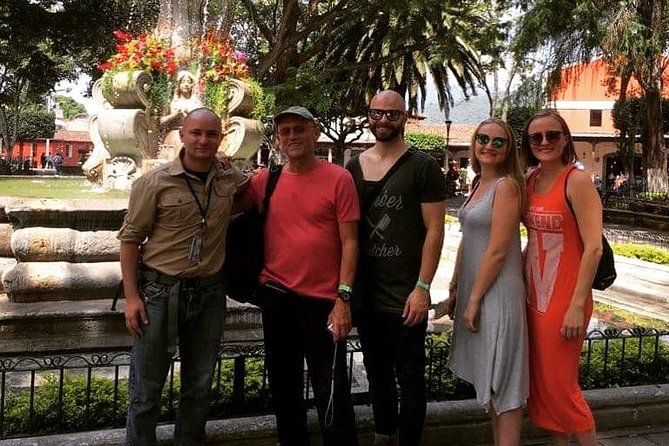
The tour starts at Casa de la Mandarina, at 2a Calle Poniente 2, and begins at 9 a.m. The timing is sensible. You get a full morning for sightseeing, then can stop for lunch or continue exploring on your own.
The route lasts about three to four hours. That is long enough to see a substantial part of Antigua, but short enough to fit into a busy itinerary. You should still wear sturdy shoes. Antigua’s streets and sidewalks can make a long walk harder than the flat distance suggests, and one couple specifically found that they walked a lot.
The maximum group size is 15. That is not a private tour, but it is small enough for questions and conversation if the group fills. The guide may adapt parts of the walk to your interests. Tony, for example, was praised for taking people to places they requested, while Roberto was noted for adjusting the experience and offering practical local tips.
Guide assignments vary. Names connected with this experience include Roberto, Carlos, Felix, Esteban, Estevan, Tony, and Manuel Barrios. The important point is the range of subjects they cover, not any one guide’s personality. You can expect a guide-led introduction rather than a fixed script that treats every group exactly the same.
More Walking Tours in Antigua Guatemala
- Antigua Cultural Walking Tour
★ 4.5 · 725 reviews - Antigua Classic Cultural Walking City Tour – the best
★ 4.5 · 227 reviews - Antigua Walking Tour
★ 4.5 · 96 reviews
Plaza Central Park, the city’s natural starting point
Plaza Central Park is the right place to begin because it gives you the basic map of Antigua. The square is surrounded by the Municipal building, the Palace, important religious buildings, and the Cathedral. During the Spanish colonial period, it served as a meeting point and place of reference.
Your scheduled time here is about 20 minutes. That is not long enough for a detailed architectural study, but it is enough to understand how the city is organized. The plaza remains a center of activity day and night, with vendors and people passing through. Weekends bring even more activity.
I like this stop because it is not only about buildings. You can watch daily life, buy a juice or coffee, and see how Antigua functions as a living town rather than an open-air museum. The guide can help you identify the surrounding structures and explain why this square matters.
The free admission is another plus. If you are new to Antigua, this opening stop should help you get your bearings fast. It also gives you a reference point for returning later on your own.
San Francisco El Grande and Guatemala’s only saint
San Francisco El Grande is one of the tour’s more meaningful stops. The church was damaged by earthquakes in 1874 and 1917, abandoned for a period, and rebuilt during the second half of the twentieth century. The restoration focused on creating a structurally sound church, a choice that was not without controversy.
The visit takes about 25 minutes. Its main focus is the tomb of Pedro de San José de Betancur, a Franciscan monk who founded a hospital for poor people in Antigua. He is the only saint from Guatemala, which gives this church a special place in the country’s religious life.
You will see a restored colonial church, but the restoration story is just as important as the finished building. Antigua is shaped by earthquakes, repairs, partial ruins, and decisions about what to rebuild. San Francisco gives your guide a chance to explain that process through one specific site.
Admission is not included here, so bring a little extra money. The supplied details do not state the fee, so you should confirm the current cost when booking or at the entrance. This is the clearest extra expense on the route.
Casa Santo Domingo and the city’s earthquake story
Casa Santo Domingo occupies the remains of what was once one of the largest convents in the Americas. The Santa Marta earthquake of 1773 destroyed most of the complex. Over time, the ruins became part of Hotel Museo Spa Casa Santo Domingo.
The scheduled visit lasts about 20 minutes, and admission is listed as free for this tour. The site works well because it combines ruins, museum spaces, and a functioning property. You are not simply looking at a collapsed wall. You are seeing how an old religious complex has been given a new role while preserving pieces of the past.
The short stop means you should not expect to see every museum room in detail. Still, it provides useful context for Antigua’s scattered ruins. The city’s damaged churches and convents are not random remnants. They reflect repeated earthquakes and the difficult question of how a historic town should be repaired and used.
More Walking Tours in Antigua:
- Walking Tour of the Wonders of La Antigua Guatemala
★ 5.0 · 65 reviews - Antigua Private Cultural Walking Tour
★ 5.0 · 52 reviews - Guided Walking Tour Legends of Antigua Guatemala
★ 5.0 · 45 reviews - Private Walking tour of Antigua Guatemala
★ 4.5 · 40 reviews
La Merced Church and earthquake-ready Baroque design
La Merced Church is known for its Baroque architecture and its unusually low bell towers. The low height was an intentional response to the earthquakes that affect the region.
That detail makes the church especially useful on a guided walk. On your own, you might admire the yellow facade and move on. A guide can point out how local builders adapted religious design to a dangerous setting. In Antigua, beauty and engineering often meet in the same building.
The itinerary does not give a separate visit length or admission price for La Merced. It is included as one of the major stops, along with other central landmarks. Since the tour covers several sites in a limited time, the exact amount of time at each location may depend on the group and the guide.
Santa Catalina Arch and the classic Antigua photograph
The Santa Catalina Arch is one of Antigua’s best-known landmarks. Built in the seventeenth century, it connected the Santa Catalina Convent with a school. Cloistered nuns could pass between the buildings without going outside.
The arch, convent, and church nave form part of the former convent complex. On a clear day, Volcán de Agua can appear behind the yellow arch, creating the picture many people associate with Antigua.
This is a quick but worthwhile stop. You get a strong photo opportunity, but the guide also gives the landmark a purpose beyond being a backdrop. The arch tells you something about convent life and the rules that shaped it.
The volcano view depends on weather and visibility. Do not treat the postcard image as guaranteed. Even without the mountain, the arch is an easy landmark to recognize and a useful point for later walks around the city.
Chocolate, cacao, and a taste of Guatemala
The Chocolate Museum adds a hands-on food stop to a route otherwise centered on churches and ruins. You learn about the cacao tree, the history of cacao, and its importance in Guatemala.
Choco Museo has an artisanal chocolate factory that uses organic Guatemalan cacao beans. The tasting includes several styles, from pure dark chocolate to blends flavored with cardamom, cinnamon, and coffee.
This stop matters because cacao connects local agriculture, trade, culture, and modern tourism. You are not just handed a sweet sample. The experience explains how cacao has changed over time and how local flavors are used in chocolate today.
The tour information says alcoholic beverages, including an artisanal beer tasting and taxes, are included. It does not say exactly where that tasting occurs or how much time is set aside for it. The chocolate stop itself is an appealing change of pace, but lunch is not included. Plan to eat after the tour rather than expecting this tasting to replace a meal.
Jade and the meaning behind Guatemalan stone
The jade stop introduces another important Guatemalan product. Jade has been used for more than 5,000 years in China and Mesoamerica to make ornaments, utensils, weapons, and tools because of its hardness and resistance.
In Guatemalan culture, jade is associated with good luck, eternal life, abundance, and hope. Guatemala is also one of only four countries in the world with deposits of jadeite jade.
This is a useful shopping and culture lesson, especially if you are tempted to buy jewelry or carved pieces during your stay. Knowing why jade matters and what it symbolizes gives you more context than a simple stop at a shop. The supplied details do not specify whether a purchase is required or how long the visit lasts, so treat it as an educational stop rather than assuming you must buy something.
Together, the chocolate and jade visits broaden the tour. You see that Antigua is not only colonial architecture. Its identity also includes food, craft, local materials, and long-standing cultural traditions.
What the guides add to the walk
The guide is the main reason to choose this experience over a self-guided circuit. Antigua’s main sights are easy to locate, but their meaning is less obvious. A good guide connects the buildings to religion, earthquakes, social life, food, and local customs.
Felix was praised for explaining Mayan traditions and spiritual ideas. Other guides have been appreciated for their understanding of architecture, history, coffee, food, and local culture. Manuel Barrios was described as making people feel like family, while Esteban was praised for showing details that an independent walk could easily miss.
The practical advice may be just as useful as the formal history. Guides have helped with questions about ATMs and places to eat. That can make a real difference on your first day, when you are still learning which streets, restaurants, and services suit you.
Some groups also received extras, including a ride on a chicken bus and a walk through a market. These were described as fun surprises, but they are not listed as guaranteed parts of the standard itinerary. Do not book expecting them. If they happen, consider them an added local touch.
Price, walking effort, and overall value
At $32 per person, this is a strong value if you want a broad introduction to Antigua in one morning. The price includes all listed taxes and fees, bottled water, and an artisanal beer tasting with taxes. It does not include lunch or the San Francisco Church admission.
The value comes from the guide’s time and the number of subjects covered. You move from colonial government and religion to earthquake repairs, cacao, jade, food, and modern city life. A self-guided walk may cost less, but you would need to research the sites and arrange your own explanations.
The tradeoff is depth. With roughly seven named stops, several locations will receive only a brief visit. If you want to study every church interior, museum display, or ruin at length, this tour will feel quick. I see it as an orientation walk, not a replacement for a full day of independent sightseeing.
The tour requires good weather. If bad weather cancels it, you are offered another date or a full refund. A minimum number of participants is also required, with the same basic choice of another date or a refund if the minimum is not met. Free cancellation is available up to 24 hours before the start time.
Who should book Walk Antigua Like a Local?
I would choose this tour for a first morning in Antigua, especially if you want history explained in plain language and practical help for the rest of your stay. It suits solo visitors, couples, families, and friends, and most people can participate.
It is also a good match if you prefer a social walk with a small group rather than a private guide. Service animals are allowed, and the meeting point is near public transportation.
I would think twice if you dislike long walks, want a slow museum visit, or have already spent several days studying Antigua’s major sites. You may get more from choosing individual museums and churches at your own pace.
Should you book it?
Book it if you want to understand Antigua quickly, see its main landmarks, sample Guatemalan chocolate, learn why jade matters, and get local advice for the rest of your visit. The strongest part is the guide’s ability to connect ordinary details, such as a low bell tower or a plaza vendor, to larger stories about the city.
Skip it if your priority is complete independence or extended time inside each attraction. For most first-time visitors, though, $32 buys a useful introduction, a good walking workout, and a clearer sense of where to return after the tour.
FAQ
How much does Walk Antigua Like a Local cost?
The tour costs $32 per person.
How long does the tour last?
The experience lasts approximately three to four hours.
Where does the tour start?
It starts at Casa de la Mandarina, 2a Calle Poniente 2, Antigua Guatemala 03001.
What time does the tour begin?
The scheduled start time is 9 a.m.
Where does the tour end?
The activity ends back at the meeting point.
Is lunch included?
No. Lunch is not included in the tour price.
Is admission to San Francisco El Grande included?
No. Admission to San Francisco El Grande is not included.
What happens if the tour is canceled because of bad weather?
You will be offered a different date or a full refund.
Just added around Antigua
- Lake Atitlan★ 5.0 · 2 reviews
- The old UNESCO★ 5.0 · 3 reviews
- Walking Tour Antigua, an open Museum★ 5.0 · 4 reviews
- Worry Doll Workshop with Doña Rosa★ 4.5 · 2 reviews
- Private Day Tour of Magic and Nature in Cascades of Urlanta★ 4.5 · 2 reviews
- Village Tour in Antigua Guatemala★ 5.0 · 4 reviews
- Volcan Pacaya on wheels ATV From Antigua or Guatemala city.★ 5.0 · 4 reviews
- Private Transfers in Guatemala★ 3.5 · 3 reviews
Walking Tours, compared.
Antigua Classic Cultural Walking City Tour – the best
Read our review →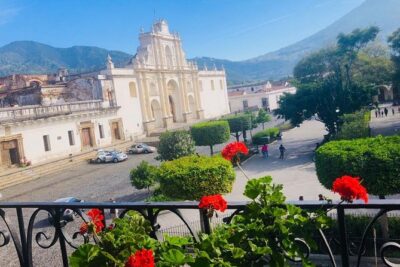
Walking Tour of the Wonders of La Antigua Guatemala
Read our review →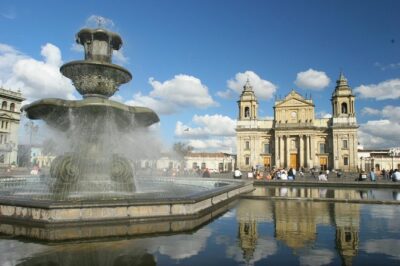
Browse the lists this tour appears in