
Review · WALKING TOURS
Antigua Cultural Walking Tour
Antigua rewards slow walking. This three-hour tour links colonial streets, earthquake-damaged churches, convents, and Maya jade traditions without asking you to study a map first. I like the small maximum of 15 people, and I like the practical food, coffee, museum, and shopping suggestions that can shape the rest of your stay. The main caution is that the route and guide quality can vary, with some departures spending too long at one stop or adding sales-focused visits.
The strongest guides, including Roberto, Felix, Antonio, and Geovanny M., bring Antigua to life with local stories and clear historical context. Still, you should confirm the guide has your preferred language and keep your expectations realistic: this is primarily a history walk, not a fast tour of every major sight.
In This Review
- Five things to know before you go
- Why this walk works best on your first morning
- La Merced begins the story with a working church
- Santa Catalina Arch explains convent life
- The Spanish Cooperation center preserves a former convent
- City Hall and the Captain General’s Palace add political weight
- San José Cathedral makes earthquake damage visible
- Casa del Jade connects Maya culture with modern shopping
- Santo Domingo turns religious ruins into a cultural center
- The guides make the largest difference
- What $35 gets you
- Walking conditions, timing, and a small-group feel
- Who should book this Antigua walk?
- Should you book the Antigua Cultural Walking Tour?
- FAQ
- How long does the Antigua Cultural Walking Tour last?
- How much does the tour cost?
- Where does the tour begin?
- Where does the tour end?
- What is included in the price?
- Is lunch included?
- Are tips included?
- How large is the group?
- Can I cancel for a full refund?
Five things to know before you go
- The best first-day use of three hours: You get an easy orientation to central Antigua, then receive restaurant, café, museum, gallery, and shopping tips.
- A small group helps: The maximum is 15 people, and some departures have been much smaller, allowing more questions and personal attention.
- Antigua’s earthquakes shape the story: Churches, ruins, rebuilt facades, and thick colonial walls make more sense once you understand the city’s repeated earthquake damage.
- Jade is part of the route: Casa del Jade includes a factory, museum, and showroom, but expect a sales presentation and compare prices before buying.
- The route may not be perfectly fixed: Some departures have skipped listed sites or replaced them with rum, leather, or other commercial stops.
- Bring sensible walking gear: Cobblestones, several hours on foot, and a moderate fitness requirement make supportive shoes and water worthwhile.
Why this walk works best on your first morning
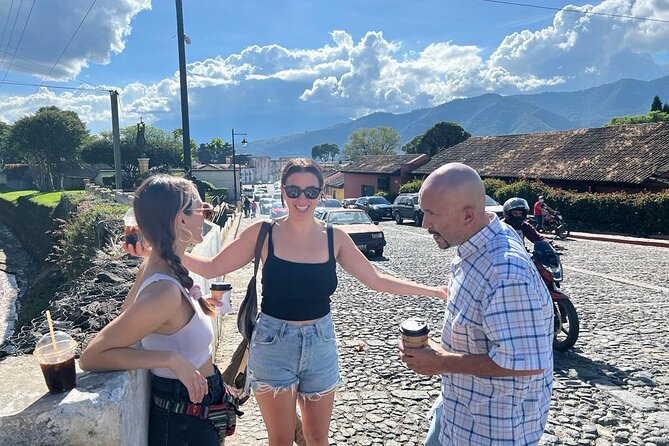
Antigua is compact, but its streets can feel confusing at first. The central square, churches, former convents, palaces, hotels, museums, and shop-lined lanes all sit fairly close together, yet the meaning of each building is easy to miss when you walk past alone.
This tour begins at Café Condesa, also identified as La Casa del Conde, on Avenida Norte 5a. From there, your bilingual guide leads you through the historic center and returns you to the heart of town, with the formal end at Centro Cultural, Centro de Convenciones y Hotel Santo Domingo.
I like this setup because you can use the walk as a city orientation. Once the tour ends, you should have a clearer sense of where Antigua’s key churches and cultural centers sit, which museums you want to revisit, and where to look for food and drinks.
The tour runs in the morning or afternoon and lasts about three hours. Some departures have stretched to roughly three and a half hours, while one guide ended early because of an unexpected call. That variation is worth keeping in mind if you have a timed reservation afterward.
More Walking Tours in Antigua Guatemala
- Antigua Classic Cultural Walking City Tour – the best
★ 4.5 · 227 reviews - Antigua Walking Tour
★ 4.5 · 96 reviews - Walking Tour of the Wonders of La Antigua Guatemala
★ 5.0 · 65 reviews
La Merced begins the story with a working church
The first listed stop is Iglesia de La Merced, with about 30 minutes set aside. The guide begins with Antigua’s importance and uses the church as an entry point into the city’s colonial and religious past.
La Merced is a useful opening stop because it puts you right into Antigua’s visual language: ornate colonial church design, sturdy construction, and the close relationship between religious institutions and city life. Your guide should explain what you are seeing rather than simply point out the facade.
This is also one place where guide quality matters. A clear guide can connect the church to wider Guatemalan history, Maya culture, politics, and the effects of earthquakes. A less organized guide may lean heavily on personal stories or jump between subjects, making the first half harder to follow.
If Iglesia de La Merced is important to you, confirm that the group is actually visiting it. At least one departure omitted the church even though it was part of the advertised route. That does not happen on every tour, but it is a fair reason to ask at the beginning.
Santa Catalina Arch explains convent life
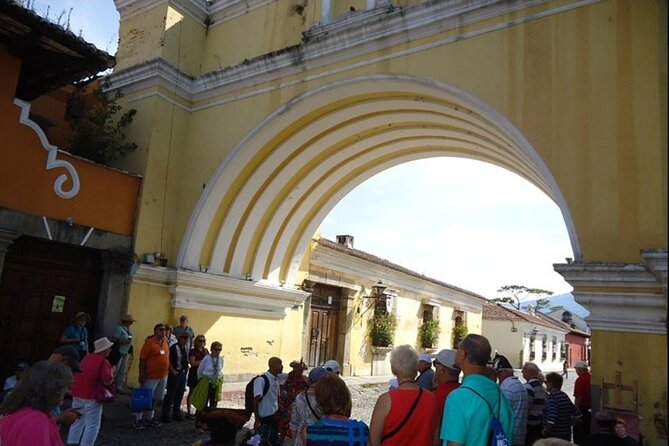
The walk continues to Arco de Santa Catalina for about 15 minutes. This famous arch was built to help cloistered nuns move between buildings without appearing in public, and the guide explains the daily life of the first order of nuns to settle in the city.
The stop is short, but the story gives the arch more meaning than a quick photograph does. You learn that Antigua’s grand architecture was also shaped by strict religious rules and the routines of people who lived behind convent walls.
The arch is one of Antigua’s most recognizable sights, so expect a popular photo stop rather than a quiet historical site. The value here comes from the explanation, especially if you have already seen the arch and wondered why it was built.
The Spanish Cooperation center preserves a former convent
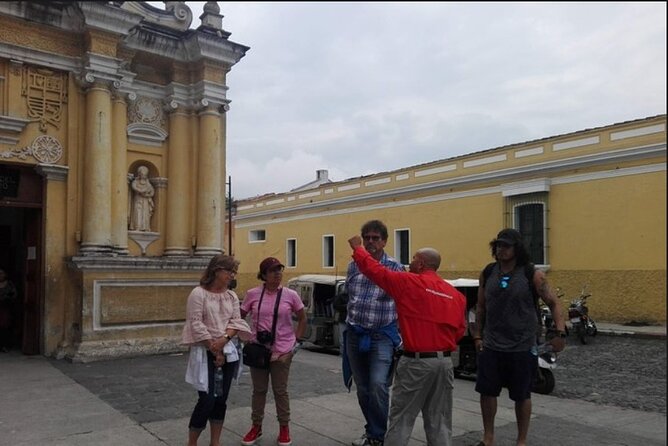
The Centro de Formación de la Cooperación Española occupies what is described as the best-restored convent on the route. You receive about 30 minutes to look around and hear how this colonial religious complex became a cultural center.
This stop is a good reminder that Antigua’s old buildings are not frozen in the past. Some now serve as places for exhibitions, cultural programs, and public events. The restored courtyards and colonial details can be just as interesting as the churches, particularly if you enjoy architecture.
The itinerary also refers to the first printing press in Antigua and a book museum. The exact timing of this stop is not clearly set out, so you should ask whether it is included on your departure. It adds a useful cultural angle to the tour by showing how books, printing, and education fit into the city’s development.
More Walking Tours in Antigua:
- Walk Antigua Like a Local
★ 5.0 · 53 reviews - Antigua Private Cultural Walking Tour
★ 5.0 · 52 reviews - Guided Walking Tour Legends of Antigua Guatemala
★ 5.0 · 45 reviews - Private Walking tour of Antigua Guatemala
★ 4.5 · 40 reviews
City Hall and the Captain General’s Palace add political weight
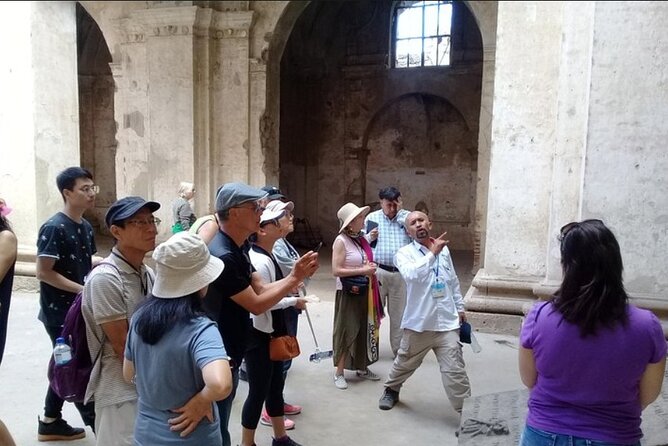
The walk also passes the Ayuntamiento, or City Hall Palace, and the Palace of the Captain General. These buildings shift the focus from worship to administration and military power.
The Captain General’s Palace housed the most important military officials. That detail helps balance the tour, since Antigua was not only a center of churches and monasteries. It was also a seat of government and authority in the region.
You may hear about the officials who worked in these buildings, the role of the city in colonial administration, and how its buildings were affected by earthquakes. The route description does not assign a separate time for these stops, so the depth of the explanation will depend heavily on your guide and the pace of the group.
San José Cathedral makes earthquake damage visible
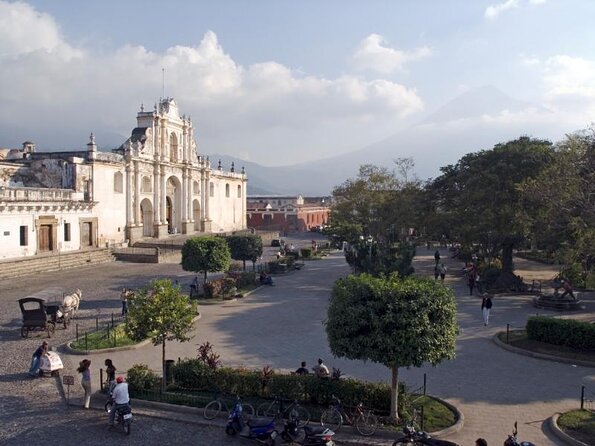
Catedral de San José receives about 30 minutes and is one of the most important religious sites on the walk. The cathedral’s ruined sections show the force of the strong earthquakes that damaged Antigua during the 18th century.
This is where the city’s past becomes especially easy to read. A guide can help you see the difference between restored frontage, surviving walls, open courtyards, and collapsed sections. The remains are not just dramatic backdrops. They explain why Antigua’s architecture feels both grand and broken.
The main drawback is pacing. One departure spent about 45 minutes at church ruins, while another was criticized for showing only the fronts of listed churches and not entering the more interesting areas. If you prefer a brisk walking route, tell the guide early that you would like to keep moving. If you enjoy architecture and historical detail, the extra time may be welcome.
The best version of this stop gives you context without turning one building into a long lecture. Guides such as Geovanny M. have been praised for allowing time to explore and ask questions, while other departures have been less focused.
Casa del Jade connects Maya culture with modern shopping
Casa del Jade is scheduled for about 40 minutes. You receive an introduction to the importance of jade for the Maya, then see a factory, museum, and showroom displaying jade carvings.
This is one of the tour’s more distinctive stops. The jade presentation gives you a direct link to Maya culture and explains why the stone carries such importance in Guatemala. It also lets you see the work behind carved jewelry and decorative pieces rather than encountering finished items without context.
But you should treat the showroom as a shopping stop as well as a cultural one. Some guides have taken a strong sales approach, and one account described the final shopping stops as much more expensive than other places in town. Listen to the explanation, enjoy the museum and carving displays, and buy only if the piece and price suit you.
The route has also included leather, rum, or other shops on some departures. A rum tasting, in particular, came with an unexpected $35 charge. The lesson is simple: ask before accepting any tasting or purchase presentation. The tour price does not cover extras, and tips are also separate.
Santo Domingo turns religious ruins into a cultural center
The final major stop is Casa Santo Domingo Museums, with about 30 minutes planned. This former headquarters of the Dominicans, one of the major religious orders, has been partly converted into a hotel and cultural center.
The setting helps you understand how Antigua’s old religious compounds have found new uses. You may see historic remains alongside hotel spaces, museums, cultural displays, and a restaurant setting. That mixture can feel unusual, but it is one of the practical realities of preserving large colonial structures.
Ending here is convenient if you want to continue at Santo Domingo after the tour. The formal endpoint is the Santo Domingo cultural, convention, and hotel complex rather than the main square, even though some route information describes the walk as finishing back at Antigua’s main square. Confirm the exact endpoint with your guide if you have plans nearby.
The guides make the largest difference
The guide is the heart of this experience. The most praised guides are Roberto, Felix, Antonio, and Geovanny M. Roberto is often described as animated, funny, friendly, and especially good at sharing local stories. His family connection to Antigua gives his talks a personal angle, and he is also credited with useful restaurant and drink recommendations.
Felix has been praised for keeping the walk interesting while explaining the city’s early history. Antonio has received strong marks for clear explanations, a friendly manner, and taking photographs for the group. Geovanny M. is noted for building on sights people had already seen and giving them more context without rushing.
That said, guide consistency is the tour’s biggest unknown. One departure was hard for English-only participants to follow because the guide mixed Spanish and English and moved between topics too quickly. Another focused so heavily on history that the group had to ask more than once to continue walking.
When you meet the guide, state your interests clearly. You can say that you want a balance of history, walking, and time inside the sites. That small request may help prevent a three-hour talk at one church or a rushed view of several others.
What $35 gets you
At $35 per person, the tour offers a reasonable package if you value a local guide, historic context, and a small-group introduction. The licensed bilingual guide is included, and admission is listed as included for the main stops.
The price is strongest when you take the walk early in your visit. A good guide can save you time later by pointing out museums, galleries, restaurants, cafés, and areas worth returning to. Several people have found that the recommendations were as useful as the formal sightseeing.
The value drops if your group misses several listed stops or spends a large part of the morning in shops. It also drops if you already know Antigua well and prefer to set your own pace. You can walk through the central area independently, but you will lose the historical links between the buildings.
Children pay half price when accompanied by two paying adults, and the child rate applies only under that condition. Lunch is not included, and tips are optional, based on your satisfaction.
Walking conditions, timing, and a small-group feel
You need a moderate level of fitness. The route takes about three hours on foot over Antigua’s cobblestone streets, with time standing at churches, ruins, convents, and shops. Supportive shoes will make the experience more comfortable.
The group maximum is 15 people, which is small enough for questions without promising a private tour. Some departures have had only a few people, creating a more personal experience. A small group can also make it easier for the guide to adjust the pace, though this depends on the individual guide.
Choose the morning if you want to use the tour as your first look at Antigua. Choose the afternoon if your schedule calls for a later start, but leave room around the three-hour estimate. The tour may operate with a multilingual guide, so confirm the language arrangement if you need full English throughout.
Arrive at the stated meeting point, Café Condesa, and look for the official guide rather than following the first person wearing a guide-style jacket. One group was approached by an unrelated guide and led away before the correct guide found them. Confirm the company and group before setting off.
Who should book this Antigua walk?
I would recommend it to you if you have just arrived, want historical background, and like to ask questions as you walk. It is also a good fit if you want restaurant and museum suggestions from someone who knows the city personally.
History fans may appreciate the longer explanations at churches and ruins. Families can use the child discount, although younger children should be comfortable with several hours of walking and standing. Solo visitors and couples may especially like the chance to meet other people in a group that can sometimes be very small.
I would be more cautious if you want a tightly controlled route with every listed stop guaranteed. I would also skip it if you dislike shopping presentations or want to explore entirely at your own pace. In that case, the tour’s commercial stops and occasional route changes may irritate you.
Free cancellation is available up to 24 hours before the start time for a full refund. Changes or cancellations inside that window are not accepted, and the experience may be canceled if the minimum number of people is not reached.
Should you book the Antigua Cultural Walking Tour?
Book this tour for orientation, stories, and a helpful introduction to Antigua’s churches, ruins, convents, government buildings, and Maya jade traditions. Its overall rating is 4.7 from 725 ratings, with 91 percent recommending it, and the strongest experiences share the same pattern: a warm guide, clear history, local tips, and an easy pace.
Go in with two protections. Confirm the meeting point and official guide before leaving, then ask which listed sites and paid tastings are included before the walk begins. If Roberto, Felix, Antonio, or Geovanny M. leads your group, you may get the engaging local perspective this tour is designed to provide. If the guide becomes too detailed or the shopping takes over, politely ask to keep the route moving.
FAQ
How long does the Antigua Cultural Walking Tour last?
The tour lasts approximately three hours. Some departures have lasted about three and a half hours, so avoid scheduling another activity too closely afterward.
How much does the tour cost?
The listed price is $35 per person. Children pay half price when accompanied by two paying adults, and the child rate applies only under that condition.
Where does the tour begin?
The meeting point is Café Condesa, also called La Casa del Conde, at Avenida Norte 5a in Antigua, Guatemala.
Where does the tour end?
The stated endpoint is Casa Santo Domingo, at 3a Calle Oriente 28 A. The tour ends at the Santo Domingo cultural center, convention center, and hotel complex.
What is included in the price?
A licensed bilingual tour guide is included. Admission is listed as included for the main itinerary stops.
Is lunch included?
No. Lunch is not included in the tour price.
Are tips included?
No. Tips are separate and are recommended according to your satisfaction with the guide and experience.
How large is the group?
The tour has a maximum of 15 participants. Some departures may be much smaller.
Can I cancel for a full refund?
Yes, if you cancel at least 24 hours before the experience start time. Cancellations or changes made less than 24 hours before the start are not accepted for a refund.
Just added around Antigua
- The old UNESCO★ 5.0 · 3 reviews
- Lake Atitlan★ 5.0 · 2 reviews
- Worry Doll Workshop with Doña Rosa★ 4.5 · 2 reviews
- Walking Tour Antigua, an open Museum★ 5.0 · 4 reviews
- Private Day Tour of Magic and Nature in Cascades of Urlanta★ 4.5 · 2 reviews
- Village Tour in Antigua Guatemala★ 5.0 · 4 reviews
- Volcan Pacaya on wheels ATV From Antigua or Guatemala city.★ 5.0 · 4 reviews
- Private Transfers in Guatemala★ 3.5 · 3 reviews
Walking Tours, compared.
Antigua Classic Cultural Walking City Tour – the best
Read our review →
Walking Tour of the Wonders of La Antigua Guatemala
Read our review →
Browse the lists this tour appears in