Review · MAYAN CULTURE EXPERIENCES
Make your own Mayan Pepian – Cooking class
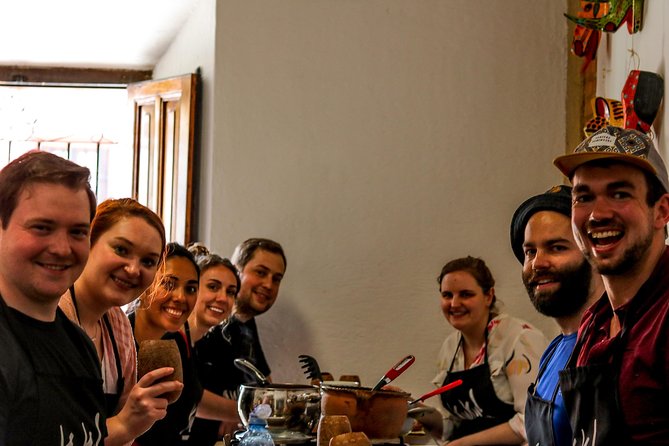
Pepian begins with a stone, not a stove. This small-group cooking experience takes you from Antigua’s Parque Central to a traditional family kitchen in Santa Ana Village, where Maria teaches her family recipe with a Mayan grinding stone. I like the hands-on cooking and the chance to share a local meal with the family who prepares it. I also like that guide Xoshil helps translate between English-speaking visitors and the Spanish-speaking cooks.
The main consideration is the price: $89 per person for about two and a half hours is more than a standard cooking lesson. You are paying for a private experience, local guiding, transport from the meeting point, and access to a family kitchen rather than a regular restaurant or formal school. The class also depends on good weather, so keep your schedule a little flexible.
In This Review
- Key points at a glance
- From Antigua’s central park to Santa Ana Village
- Meeting Maria’s family in a traditional kitchen
- Grinding pepian the Mayan way
- Preparing the side dish and Guatemalan tortillas
- Sitting down to eat what you made
- What the $89 price really covers
- Who will enjoy this cooking class most
- Should you book Maria’s pepian class?
- FAQ
- Where does the cooking class begin?
- Where does the activity end?
- How long does the class last?
- What food and drink are included?
- Are alcoholic drinks included?
- Is this a private activity?
Key points at a glance
- Mayan grinding stone: You help prepare pepian with a traditional stone tool instead of watching a chef do all the work.
- Maria’s family recipe: The lesson takes place in a local home kitchen, giving the meal a personal and family-based setting.
- Santa Ana Village setting: You leave central Antigua for a quieter village setting with attractive views around town.
- Xoshil translates and guides: English speakers receive help understanding both the cooking steps and the family’s conversation.
- More than pepian: The experience includes a side dish, Guatemalan tortillas, snacks, and one Mayan beverage.
- Private format: Only your group takes part, which makes it easier to ask questions and join in.
From Antigua’s central park to Santa Ana Village
The experience begins at Parque Central of Antigua Guatemala, at 4 Avenida Norte. This is a practical meeting point in the middle of town, easy to identify while you are getting your bearings. From there, Xoshil guides your group toward a local home in Santa Ana Village on the outskirts of Antigua.
The change in setting is part of the appeal. Antigua’s center is filled with churches, courtyards, shops, and restaurants built for visitors. Santa Ana offers a more domestic setting, where the focus shifts from sightseeing to everyday food traditions. You are not simply ordering pepian from a menu. You are entering a family kitchen and learning how the dish comes together.
The exact transport arrangement is not detailed, so you should confirm the pickup plan when your booking is confirmed. The listed start and end point is Parque Central, and the activity finishes back there. Allow enough time around the class for the journey to and from the village, even though the stated activity length is about two hours and thirty minutes.
Xoshil’s role adds value before the cooking starts. One English-speaking participant found her helpful for explaining Antigua and Guatemala along the way, as well as translating what the family shared during the lesson. That matters because the class is built around conversation and participation, not just a printed recipe.
More Mayan Experiences in Antigua Guatemala
- Mayan Cultural Walking Tour in La Antigua
★ 5.0 · 36 reviews - IXIMCHE MAYAN RUINS TOUR from La Antigua
★ 5.0 · 10 reviews - Lake Atitlan: Upper Mayan Trail from Antigua or Panajachel
★ 4.5 · 10 reviews
Meeting Maria’s family in a traditional kitchen
At the home, Maria and her family lead the cooking portion. The setting is important. A commercial school can offer polished work surfaces and carefully measured ingredients, but a family kitchen gives you a clearer sense of how food is taught within a household.
You can expect a warm welcome and plenty of opportunities to take part. The class is not designed as a demonstration where you sit at a distance while someone else handles every task. You help prepare the food, ask questions through Xoshil, and see how the recipe moves from raw ingredients to a finished meal.
The family’s pride in its cooking and culture is one of the strongest parts of this experience. That pride gives the lesson a human center. Pepian is not presented as a museum piece or an exotic dish for display. It is a food with a place at the family table.
The home setting may also mean fewer of the conveniences you would find at a dedicated cooking school. The tour description does not promise a professional kitchen, air conditioning, or a formal classroom layout. If you prefer a highly polished lesson with printed stations and restaurant-style service, this may feel informal. If you want a personal exchange and a meal prepared in a real family setting, the informality is exactly the point.
Grinding pepian the Mayan way
Pepian is one of Guatemala’s best-known traditional dishes, and the central lesson is how to build its flavor with a Mayan grinding stone. This tool turns the preparation into more than a quick recipe exercise. You get a physical sense of how ingredients were traditionally processed before modern kitchen equipment became common.
The grinding stone also slows the lesson down in a useful way. Instead of rushing from one instruction to the next, you can pay attention to texture, effort, and technique. Ask Xoshil to clarify what you are doing and why, especially if you have never worked with a stone grinder before.
The available information does not list every ingredient or provide a step-by-step recipe, so you should not expect a precise ingredient chart in advance. The focus is on learning Maria’s family method and helping prepare the food. That makes the class valuable for understanding the dish, though it may be less useful if your main goal is to leave with a formally printed recipe and exact measurements.
Pepian’s importance also gives the lesson cultural weight. You are learning one of Guatemala’s emblematic foods in the country where it belongs, from a family that makes it as part of its own food tradition. That connection is hard to reproduce at a restaurant.
Preparing the side dish and Guatemalan tortillas
The class includes a side dish and Guatemalan tortillas, so the experience goes beyond a single pot of pepian. One participant described making three different traditional Guatemalan foods, which suggests that the lesson includes several preparation tasks rather than one narrow demonstration.
Tortillas are especially useful in a cooking class because they connect the main dish to the way it is eaten. You get to see how the meal works as a whole, not just how one sauce or stew is prepared. The side dish adds another piece of the family meal and gives you more chances to participate.
The exact side dish is not specified, so the menu may vary. That is worth keeping in mind if you have dietary restrictions or a particular food in mind. Contact the provider before booking if you need ingredient information. Service animals are allowed, but the available details do not list other dietary or allergy accommodations.
Snacks are included as well. They give you something to eat during the lesson while the main food is being prepared, and they make the experience feel like a shared visit rather than a strict cooking appointment.
More Workshops in Antigua Guatemala
- Authentic Guatemalan Cooking Class in Antigua
★ 5.0 · 438 reviews - Bean-to-Bar Chocolate Workshop in ChocoMuseo Antigua
★ 5.0 · 353 reviews - Guatemalan Cooking Class & Market Tour
★ 5.0 · 213 reviews - Guatemalan Cooking Class and Market Tour
★ 5.0 · 145 reviews
Sitting down to eat what you made
The best payoff comes at the end, when you eat the results. You are not preparing food only for a photograph or a recipe card. The meal is part of the experience, and the family shares the finished dishes with you.
A Mayan beverage is included, along with the pepian, side dish, tortillas, and snacks. Alcoholic drinks are not served or sold, so plan on a nonalcoholic meal. The inclusion of a local beverage helps round out the food experience without adding a surprise charge.
This final meal also gives you time to talk with Maria and her family through Xoshil. Cooking side by side can make cultural exchange easier than a formal sightseeing stop. You have a shared subject in front of you, and the food gives everyone something to discuss.
Still, keep your expectations realistic. This is a short class, not a full day of culinary training. You will learn the family’s approach and take part in the meal, but the description does not promise a take-home cookbook, market visit, cocktail pairing, or advanced instruction.
What the $89 price really covers
At $89 per person, this class sits at the higher end of short cooking activities in Antigua. The value depends on what you want from the outing.
If you only want to eat pepian, local restaurants will cost less. If you want a polished lesson in a tourist-oriented school, you may find other options with more formal facilities. But this experience includes several things that are difficult to price separately: a private group, a guide who translates, a visit to a family kitchen, hands-on work with a Mayan grinding stone, a full meal, and a village setting outside the center.
The private format is a real advantage. Only your group participates, so you do not have to compete for a place at the counter or wait through a long round of questions from strangers. You can ask Xoshil to slow down the translation, request more explanation about a technique, or spend more time talking with Maria’s family.
For couples, families, and small groups who value personal contact, the price can make sense. Solo visitors should think more carefully about the cost, since the private format may feel expensive when paid alone. The experience is also a better fit for people who want cultural context and participation than for those simply looking for a cheap lunch.
The tour is booked about 19 days ahead on average, which suggests that you should not leave it until the last minute if the date matters to you. Confirmation arrives within 48 hours of booking and depends on availability.
Who will enjoy this cooking class most
I would recommend this experience to you if food is one of the main ways you connect with a place. You should also enjoy meeting local people, working with your hands, and accepting a lesson that feels personal rather than highly staged.
It suits English speakers particularly well because Xoshil can translate the Spanish-speaking family’s explanations. That removes a major barrier and lets you follow the conversation instead of guessing what is happening.
Families may appreciate the private setup, especially if children enjoy helping with simple cooking tasks. Couples and friends can turn it into a shared meal with a strong local connection. It also works well for repeat visitors to Antigua who have already seen the main monuments and want an activity beyond the central streets.
I would be more cautious if you need a guaranteed menu, exact ingredient list, formal kitchen facilities, or a fully scripted class. The supplied details do not identify the ingredients, the side dish, the specific transport method, or the precise cooking tasks. Ask those questions before booking if they affect your decision.
The experience requires good weather. If poor weather causes a cancellation, you are offered another date or a full refund. You can cancel for a full refund up to 24 hours before the start time, but cancellations or changes made less than 24 hours ahead are not accepted for a refund.
Should you book Maria’s pepian class?
Book it if you want a private, family-led food experience rather than a standard restaurant meal. The Mayan grinding stone, Maria’s recipe, the village kitchen, and Xoshil’s translation give the class a clear sense of place. The meal you prepare is only part of the value. The family connection is the real reason to choose it.
Skip it if $89 feels too high for a two-and-a-half-hour activity, or if you want exact menu details and professional cooking-school comforts. For everyone else, especially English-speaking visitors who want to understand Guatemala through food, this is a thoughtful use of an afternoon in Antigua.
FAQ
Where does the cooking class begin?
It begins at Parque Central of Antigua Guatemala, at H748+QG4, 4 Avenida Norte, Antigua Guatemala.
Where does the activity end?
The activity ends back at the meeting point in Parque Central.
How long does the class last?
The cooking experience lasts approximately two hours and thirty minutes.
What food and drink are included?
The experience includes snacks, the pepian cooking class, a side dish, Guatemalan tortillas, and one Mayan beverage.
Are alcoholic drinks included?
No. Alcoholic beverages are not served or sold during the experience.
Is this a private activity?
Yes. Only your group participates in the activity.
More cooking classes in Antigua
- Cooking class and market tour/Pepian Workshop
★ 5.0 · 33 reviews - Maya Cooking Class from Panajachel
★ 5.0 · 20 reviews - Lake Atitlan Maya Kitchen: 3-Hour Cooking Class
★ 4.8 · 17 reviews - Antigua: Cooking Class with Local Family
★ 5.0 · 6 reviews
More Mayan Experiences in Antigua
- Solola Market, Panajachel Cloud Forest and Mayan Villages from Antigua
★ 4.5 · 9 reviews - From Antigua: Explore Mayan villages around Lake Atitlan
★ 3.5 · 9 reviews - Atitlan Mayan Villages Tour
★ 5.0 · 3 reviews - From San Ignacio: Tikal Maya Site Day-Trip with Local Lunch
★ 4.8 · 94 reviews
Just added around Antigua
- Lake Atitlan★ 5.0 · 2 reviews
- The old UNESCO★ 5.0 · 3 reviews
- Walking Tour Antigua, an open Museum★ 5.0 · 4 reviews
- Worry Doll Workshop with Doña Rosa★ 4.5 · 2 reviews
- Private Day Tour of Magic and Nature in Cascades of Urlanta★ 4.5 · 2 reviews
- Village Tour in Antigua Guatemala★ 5.0 · 4 reviews
- Volcan Pacaya on wheels ATV From Antigua or Guatemala city.★ 5.0 · 4 reviews
- Private Transfers in Guatemala★ 3.5 · 3 reviews
Mayan Culture Experiences, compared.
From San Ignacio: Tikal Maya Site Day-Trip with Local Lunch
Read our review →
Tikal Private Day Tour Maya Adventure from Flores
Read our review →

3 Mayan Villages Tour to Lake Atitlan (full day)
Read our review →
Tour to Tikal: from Mundo Maya Airport in Flores
Read our review →